
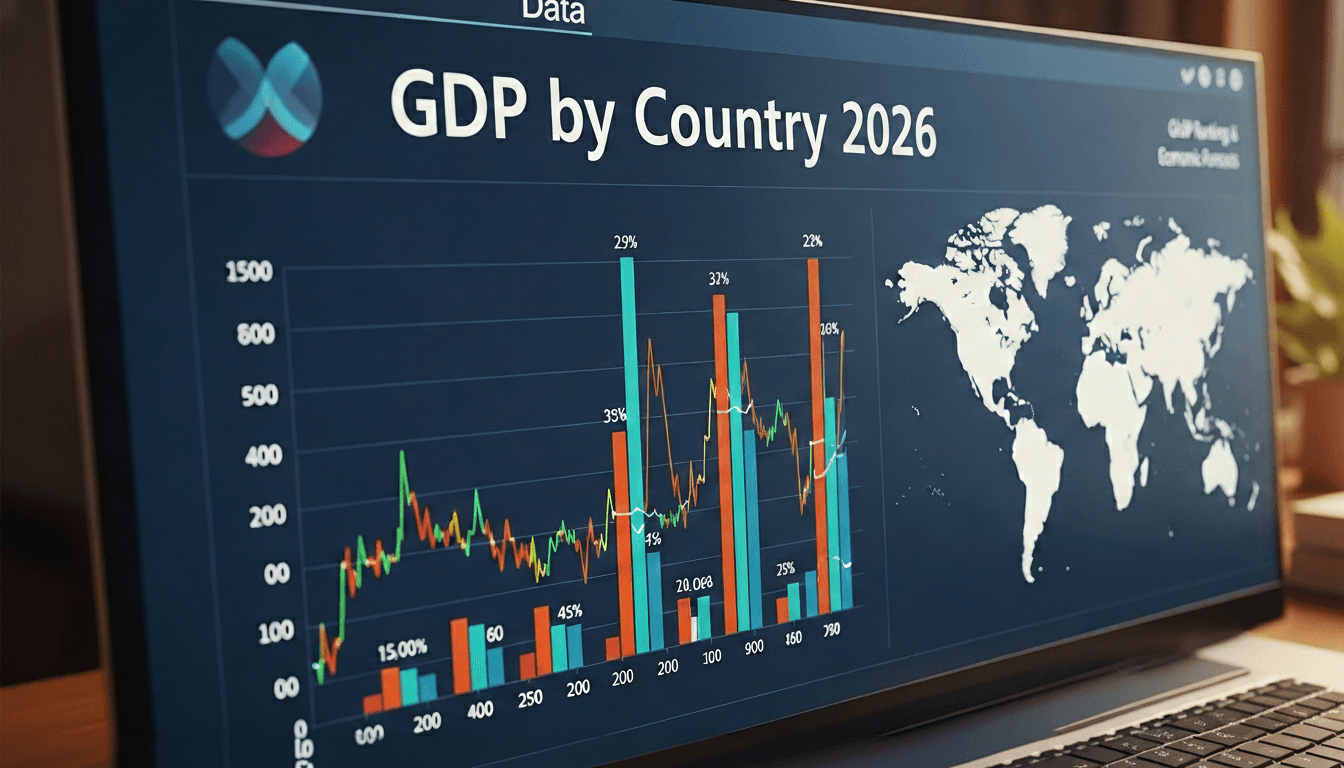
GDP by Country 2026: Global Rankings & Economic Forecasts
Discover the ranking of the world’s economies in 2026! Who will dominate the top spot: America or China? And will India sweep third place? Your comprehensive guide to GDP forecasts and upcoming investment opportunities.
Introduction: The Great Economic Shift of 2026 (March 27, 2026)
The global economic map is being ripped up and redrawn in real-time. Forget the stale, 20th-century stability you grew up with; we are now in the era of high-velocity wealth migration. In 2026, the World GDP Ranking 2026 isn’t just a spreadsheet for academics—it is a brutal survival guide for global capital. As we dissect the IMF World Economic Outlook March 2026, the data screams a single truth: agility has officially murdered legacy. Nations that were “too big to fail” are now gasping for air under mountains of sovereign debt, while the Fastest Growing Economies 2026 are sprinting ahead by turning their backs on old-school financial engineering. This is a cold, hard world of winners and losers. If you are an investor in Europe or a strategist in Asia, you need to understand that the Global Economic Outlook 2026 is about one thing: sovereignty. You either own the machine, or you get crushed by it.
Table of Contents
I: The Top 10 Economies in 2026: A New Power Balance
- United States: Sitting at the top with a nominal GDP of $29.4 trillion. It’s still the king, but the throne is shaking under the weight of debt.
- China: The undisputed master of the GDP PPP by country 2026 metrics. They stopped caring about “growth at any cost” and started focusing on “owning the future.”
- India: The star of the Emerging Markets Forecast 2026. India is no longer “emerging”; it has arrived, and it’s hungry for more.
- Germany: Europe’s industrial lungs are struggling with energy prices. They are in a race to automate or face a long, slow decline.
- Japan: Battling a shrinking population by becoming the global HQ for robotics and labor-replacing AI.
- United Kingdom: Defying the doomsayers with a services sector that has managed to pivot to the Global South post-Brexit.
- Brazil: Riding a commodity super-cycle that has turned South America into a strategic mineral fortress.
- France: Leaning hard into nuclear energy and luxury exports to keep its G20 economic ranking 2026 spot.
- Canada: A resources-and-immigration play that is barely keeping its head above water in the top 10.
- Indonesia: The new “Factory of Asia.” Indonesia is doing to the 2020s what China did to the 1990s.
II: Drivers of the 2026 Economic Landscape
- The Impact of AI on GDP 2026: This isn’t about chatbots anymore. AI is adding trillions by optimizing global logistics, surgical precision in manufacturing, and automated energy grids.
- Energy Sovereignty: In 2026, if you import your energy, you export your wealth. The winners are nations with independent, green, or nuclear grids.
- Reshoring and Friend-Shoring: The “China-only” supply chain is dead. Investment Opportunities in 2026 are moving to Mexico, Vietnam, and Poland as firms flee geopolitical risk.
- Halal Trade Corridors: A massive surge in the Arab Countries GDP Ranking 2026. The Gulf is becoming the world’s most stable bridge between East and West.
- Sovereign Debt Ratios: Debt is the new black plague. Nations with debt-to-GDP over 120% are the “zombies” of the 2026 economy.
- The Demise of Easy Money: High interest rates have exposed the rot in Western banking; cash and real assets are the only kings left.
III (Table 1): Nominal GDP vs. PPP Rankings 2026 (Detailed)
| Country | Nominal GDP (USD Trillion) | GDP (PPP) Ranking | 2026 Growth Forecast | Primary Growth Driver | Economic Risk |
| USA | $29.4 | #2 | 2.1% | AI & Consumer Tech | Sovereign Debt |
| China | $21.8 | #1 | 4.4% | Green Energy & EV | Real Estate Bubble |
| India | $4.9 | #3 | 6.8% | Digital Services | Infrastructure Lag |
| Germany | $4.6 | #5 | 0.9% | Specialized Manufacturing | Energy Costs |
| Japan | $4.3 | #4 | 1.1% | Robotics & Automation | Demographics |
| Indonesia | $1.6 | #7 | 5.2% | Mineral Processing | Currency Fluctuations |
IV: The Fall of the Old Guard and the Rise of Asia
If you are still waiting for the “good old days” of 2019 to return, you’re looking in the rearview mirror while driving toward a cliff. The Global Economic Outlook 2026 is a story of two worlds. On one side, you have the “Legacy Giants” like Europe and Japan, struggling with aging populations and mountains of pension liabilities they can’t afford. On the other side, you have the Future Economic Giants 2026-2030—nations like India, Indonesia, and Saudi Arabia—that are young, hungry, and building infrastructure for a digital-first world. In 2026, economic power is no longer just about how much you produce; it’s about how much of that production you actually own. Sovereignty isn’t a political slogan anymore; it’s the only way to protect your GDP nominal 2026 from being inflated away by global debt.
V: Key Economic Terminology for 2026
- GDP Nominal 2026: The raw, unadjusted dollar value of a nation’s economy. It’s what banks look at, but it doesn’t tell the whole truth.
- Purchasing Power Parity (PPP): The “Real World” metric. It adjusts for the cost of a loaf of bread or a liter of fuel. It’s why China and India look so much bigger here.
- Asset Inflation: When the price of houses and stocks goes up while the actual economy is stagnant. A major 2026 trap.
- Resource Nationalism: When a country says, “You can’t have our Lithium unless you build the factory here.” This is changing the World GDP Ranking 2026.
- Halal Finance: A debt-free, asset-backed financial system that is becoming the preferred refuge for ethical investors in 2026.
- Zakat Liquidity: The flow of purified wealth in Islamic nations that acts as a social stabilizer during global recessions.
VI: Why the 2026 Recession Probability is High for Some
- The Debt Trap: Western nations are spending more on interest payments than on their militaries. This is a terminal cycle.
- AI Displacement: Millions of white-collar jobs in Europe and the US are being automated, leading to a “hollowing out” of the middle class.
- Energy Scarcity: Nations that didn’t pivot to nuclear or solar in 2023 are now paying triple the price for industrial energy.
- The Productivity Gap: Younger nations are working harder and longer, while older nations are focused on “work-life balance” they can’t afford.
- Trade Wars 2.0: The “Green War” over EV batteries and solar panels is splitting the global market in two.
VII (Table 2): Richest Countries by GDP Per Capita 2026 (The Individual Wealth)
| Rank | Country | GDP Per Capita (Nominal) | Primary Industry | Economic Stability Score |
| 1 | Luxembourg | $145,200 | Finance & Banking | Extreme |
| 2 | Ireland | $118,400 | Tech & Pharma HQ | High |
| 3 | Switzerland | $104,800 | Luxury & Finance | Extreme |
| 4 | Qatar | $92,500 | Natural Gas | High |
| 5 | Singapore | $89,900 | Trade & Logistics | Extreme |
| 6 | Norway | $85,400 | Energy & Wealth Fund | High |
VIII: The Halal Economic Boom: Saudi Arabia and the Gulf Pivot
The Arab Countries GDP Ranking 2026 is the shock of the decade. Saudi Arabia’s Vision 2030 has moved from the “construction” phase to the “profit” phase. They aren’t just selling oil anymore; they are selling green hydrogen, tech-hub real estate, and global logistics. This massive shift is creating a vortex for Sharia-compliant investment. The Gulf is no longer a gas station; it is a global liquidity fountain. For an investor, the Gulf offers something the West can’t: growth without the Riba-heavy debt anchors. This is “Ethical Capitalism” on a scale we’ve never seen before.
IX: Advanced Economic Concepts 2026
- The End of Dollar Hegemony: Central banks are now holding 15-20% of their reserves in gold and “hard” emerging currencies.
- AI-Led Disruption: We are seeing “Decentralized GDP”—wealth generated by AI agents that don’t belong to any one country.
- Strategic Mineral Hegemony: Control over Lithium, Cobalt, and Copper is now the “new oil” in terms of geopolitical power.
- Digital Nomad GDP: Small island nations are boosting their GDP by 10% just by selling residency to remote tech workers.
X: Mistakes Investors Make in 2026
- Investing in “Ghost” Companies: Firms that only survive because of low-interest loans that are gone forever.
- Ignoring the Global South: Still thinking the world revolves around New York, London, and Frankfurt.
- Holding Fiat Currency: Thinking a digital “zero” in your bank account is safe from inflation. It’s not.
- Neglecting Halal Principles: Failing to see that debt-free, asset-backed investing is the only way to survive a credit crunch.
- Ignoring Demographic Trends: Investing in a country where the average age is 50. There’s no growth there.
XI (Table 3): Regional GDP Growth Rates 2026 (The Reality Check)
| Region | Expected GDP Growth | Main Risk Factor | Main Opportunity |
| South Asia | 6.5% | Geopolitical Friction | Young, Tech-Savvy Workforce |
| Middle East | 4.8% | Commodity Volatility | Non-Oil Diversification |
| North America | 2.0% | Political Polarization | AI & Tech Dominance |
| European Union | 1.2% | Energy Costs | High-end Global Exports |
| Southeast Asia | 5.1% | Supply Chain Shifts | Massive Manufacturing Reshoring |
XII: Avoiding the Global Recession Trap
In 2026, a “recession” is a choice. If your economy is built on debt, you will crash. If it’s built on productivity and real assets, you will thrive. The 2026 Global recession probability is hovering around 65% for G7 nations and only 15% for the Gulf and Southeast Asia. To stay safe, you need to align your capital with actual tangible value—food, energy, microchips, and ethically managed capital. If your wealth isn’t sitting in a halal investment portfolio, you are effectively betting on a global debt-bubble that is already leaking air. Don’t be the last person holding a paper promise when the world wants real value.
XIII: 5 Strategies for National Economic Success
- Aggressive AI Adoption: If you don’t automate your bureaucracy, it will bankrupt you.
- Equity-Based Growth: Stop borrowing; start building through partnerships and shared risk (the Halal way).
- Food and Energy Security: If you can’t feed your people or power your factories, you have no sovereignty.
- Education for the 2030s: Teaching kids to code AI, not just use it.
- Stable Banking: Ensuring your banks are backed by gold and real property, not speculative debt.
XIV: Red Flags in the Global Market
- Sovereign Debt Spikes: Watch for nations where debt interest exceeds the education budget.
- Social Unrest: High inflation + slow growth = trouble in the streets.
- Currency Devaluation: When a government starts printing money to pay its own employees.
- Resource Bans: When Indonesia or Brazil stop exporting raw materials and demand local factories.
- Tech Monopolies: When a single AI company has a larger market cap than the GDP of France.
XV (Table 4): G20 Economic Ranking 2026 (Projected Results)
| Rank | Country | GDP Nominal (USD) | Economic Outlook | Key Success Factor |
| 1 | USA | $29.4T | Stable | AI Leadership |
| 2 | China | $21.8T | Cautious | Green Tech Dominance |
| 3 | India | $4.9T | Very Bullish | Digital Infrastructure |
| 4 | Germany | $4.6T | Cautious | Specialized Manufacturing |
| 5 | Japan | $4.3T | Neutral | Robotics & Automation |
XVI: The Smartest Move for 2026 and Beyond
The smartest move is to stop being a “tourist” in the global economy. The World GDP Ranking 2026 shows that the old winners are tired and broke. The new winners are in the East and the Gulf. If you want to build a legacy, look for where the cranes are moving and where the infrastructure is being built. Focus on the Fastest Growing Economies 2026 and align your capital with actual productivity. Sovereignty is the only true wealth. Wealth is just the tool to get you there. Stay sharp, or stay broke.
Conclusion: Final Outlook for 2026
The year 2026 is the ultimate tipping point. We are moving from a unipolar world to a multipolar reality where the Emerging Markets Forecast 2026 is the only thing that matters. If you are still waiting for “normal” to return, you have already lost the race. The World GDP Ranking 2026 is not just a chart—it is a map of where human energy, innovation, and ethical capital are flowing. Follow the growth, protect your financial sovereignty, and ensure your investments are on the right side of history. The 2026 economy rewards the bold and the ethical. Stay sharp.
FAQ: Dominating the 2026 Economic Cycle
Which countries have the highest GDP in 2026?
The United States leads in nominal GDP ($29.4T), while China dominates in GDP (PPP) terms. India is the fastest-growing major titan, comfortably holding the #3 spot globally.
What is the projected GDP for 2026?
Total global GDP is expected to surpass $115 trillion nominal, with a massive percentage of that growth coming from the Impact of AI on GDP 2026 and emerging market expansion.
What is the highest GDP per capita in the world 2026?
Luxembourg remains the undisputed champion at $145,200, followed by the tax-efficient tech hubs of Ireland and Switzerland. These are small nations with massive global capital flows.
Which country will be the richest in 2030?
By 2030, China is projected to be the largest economy in terms of Purchasing Power Parity (PPP). In nominal terms, the USA and China will be battling for #1, with India rapidly closing the gap.
What will be Germany’s GDP in 2030?
Forecasts place Germany at roughly $5.2 trillion nominal, provided they successfully pivot to green hydrogen and maintain their leadership in specialized industrial machinery.
What will be China’s GDP in 2026?
Projected at $21.8 trillion nominal. While growth has “slowed” to 4%, the quality of that growth—shifting from real estate to high-tech manufacturing—is much higher than in the previous decade.
Which is richer China or USA?
The USA is “richer” per capita and in nominal dollar power. China is “larger” in terms of real-world production, industrial infrastructure, and purchasing power (PPP).
Who has the top 10 GDP in 2050?
PwC and Goldman projections for 2050: 1. China, 2. India, 3. USA, 4. Indonesia, 5. Brazil, 6. Russia, 7. Mexico, 8. Japan, 9. Germany, 10. UK.
Which country will be #1 in 2050?
The majority of models favor China, but India’s younger demographic gives it a stronger “tail-end” growth trajectory that could see it seize the crown by the 2060s.
What are the top economies in Europe 2026?
Germany is still #1, followed by the UK, France, and Italy. Poland is the dark horse, climbing the ranks faster than any other major European nation.
Disclaimer: This content is for educational and informational purposes only and does not constitute financial, legal, or religious advice. Financial data and market conditions are subject to change, and we disclaim any responsibility before God for decisions made based on this analysis. It is your personal responsibility to ensure that your earnings and investments align with Sharia principles by consulting specialists or using verification tools where applicable. We are not responsible for any financial losses; seeking permissible sustenance remains your individual accountability.
To ensure your strategic planning is grounded in the most accurate Global Economic Outlook 2026 data, We strongly recommend aligning your strategy with these Trusted global standards references to ensure the precision of your 2026 projections.
1.Global Economic Benchmark: GDP by Country 2026 (Nominal Projections) (Worldometer / IMF Source)
2.Global Investment & GDP Benchmark: Top Economies by GDP Ranking and FDI Inflows 2026 (ResearchFDI)
