
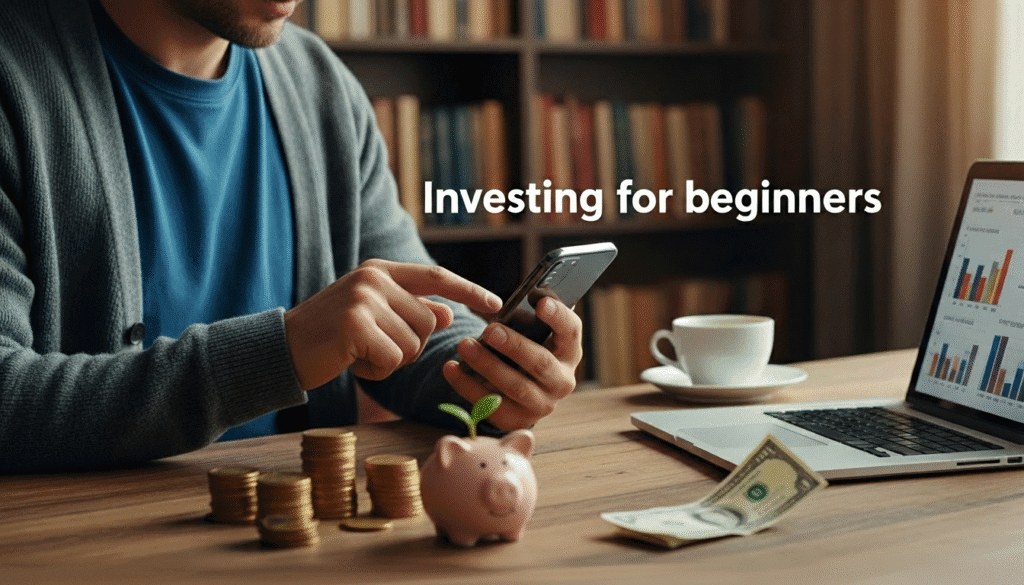
Investing for Beginners 2026: How to Start and Grow Your Money
Stop trading time for money. Discover the best investment strategies for beginners in the high-rate 2026 economy. From understanding what is a stock to mastering your retirement portfolio, we provide the mechanical roadmap you need to build long-term wealth and financial sovereignty.
Introduction: The New Reality of Investing – The End of Easy Money
Let’s be honest: the financial world of 2026 is a far cry from the predictable markets we saw a decade ago. We have officially closed the chapter on “Easy Money” and near-zero interest rates that made almost every asset look like a winner. Today, we are operating in a high-rate environment where inflation is sticky and AI-driven volatility is the new normal. For those of you just starting—the investing for beginners cohort—the goal has shifted from “finding a hot tip” to building a psychological fortress. This isn’t a typical beginner investing guide filled with fluff; it is a clinical roadmap for the modern system. We will move from the basics of what is a stock to implementing the best investment strategies that ensure your success is a result of structural discipline, not luck.
I. The Foundational Mechanics – Understanding the Engine of Wealth
- What is a Stock, Really? Forget the complex jargon. A stock is a legal contract of ownership. It gives you a fractional claim on a company’s future profits and assets. When you buy, you aren’t just betting on a price; you are hiring a workforce to generate wealth for you.
- The Valuation Reality: In 2026, a stock’s price reflects the market’s “consensus” on its future. If you can’t see the company surviving the AI transition, its current price is irrelevant.
- Compound Interest (The Engine): This is simply the “interest on your interest.” With 2026’s higher rates, your money can grow faster, but only if you give it the one thing it craves: Time.
- The Price of Hesitation: Waiting even three years to start in your 20s can slash your final retirement pot by a massive margin. Start small, but start now.
- Growth vs. Income: Capital appreciation makes you wealthy, but dividends (the income) provide the cash flow that keeps you in the game during market crashes.
- The Shareholder’s Power: As a beginner, you must realize that even one share gives you a voice. You are a business owner, and you should act like one.
- Wealth Sovereignty: The end goal of investing for beginners is to convert your active labor into enough assets that your money eventually works harder than you do.
II. Foundational Steps and Behavioral Defenses
- The “Sleep Test” for Risk: Your risk tolerance isn’t a score on a quiz. It’s a physical feeling. If a 10% market dip makes you lose sleep or check your phone every five minutes, you are over-leveraged and need to dial back your risk.
- Sequence Risk Awareness: If you are 25, market crashes are a gift (you buy cheap). If you are 60, they are a threat. Adjusting your portfolio based on your life stage is the key to long-term survival.
- Tax-Sheltered Vehicles: Before you open a standard account, max out your tax-advantaged ones (like IRAs or 401ks). The tax break is a “guaranteed return” that most professionals can’t beat.
- Fractional Share Revolution: In 2026, you don’t need $3,000 to buy one share of an expensive stock. Use brokers that offer fractional shares to stay diversified even with $10.
- The Liquidity Moat: Never invest the money you need for rent. You need a “moat” of 6 to 12 months of living expenses in a High-Yield Savings Account (HYSA) before you touch the stock market.
- The Anti-Panic Protocol: An emergency fund isn’t just for car repairs; it’s a psychological tool. It gives you the “power of doing nothing” when everyone else is selling in a panic.
III. Key Financial Benchmarks for 2026 Resilience
The following table identifies the quantitative targets required to ensure your investment system is robust enough to handle the 2026 economic regime.
| Metric / Focus Area | 2026 Target Benchmark | Strategic Significance |
| Emergency Buffer | 6 – 12 Months of Living Costs | Keeps you from being a “forced seller” during a market downturn. |
| Max Fund Fees (ER) | < 0.15% per annum | Keeps the majority of the market’s growth in your pocket, not the bank’s. |
| Equity Exposure | (110 – Your Age)% | Balances the need for aggressive growth against the risk of outliving your money. |
| Portfolio Overlap | Less than 20% | Ensures you are actually diversified and not just owning the same 10 stocks in 5 funds. |
| Rebalancing Frequency | 1 – 2 Times per Year | Mechanically forces you to “buy low and sell high” without emotional bias. |
| Dividend Yield Base | 1.5% – 3.5% | Creates a self-funding loop for purchasing more shares through DRIP. |
IV. Detailed Analysis of Strategy & Fee Impact
In the 2026 economy, fees are the silent killer of wealth. Many beginners get seduced by “Active Managers” who promise to beat the market for a 1% fee. In reality, over a 30-year window, that 1% can rob you of nearly 25% of your total potential wealth. This is why Index Funds and ETFs are the ultimate choice for the stock market for beginners. They offer the lowest cost, which is the only part of investing you can actually control.
Furthermore, success is found in the Diversification Mandate. The global economy is no longer a one-country show. A resilient beginner investing guide in 2026 must emphasize international stocks for diversification. By holding a global portfolio, you hedge against local currency collapses and regional recessions. You are betting on the global economy as a whole, rather than the political stability of a single nation.

V. Actionable Tactics for Portfolio Growth
- Automate Your DCA: Set up an automatic transfer from your paycheck. Dollar-Cost Averaging removes the “Fear of the High” and makes you love market dips.
- Enable Your DRIP: Setting dividends to “Auto-Reinvest” is how you turn a small snowball into an avalanche. Every cent is put back to work immediately.
- The 15-Minute Rebalance: Once a year, check your allocation. If stocks have grown too much, sell some and buy bonds. It sounds boring, but it’s the secret to market success.
- Tax-Loss Harvesting: Don’t fear a losing position. If a stock is down at year-end, sell it to offset your tax bill and immediately buy a similar (but not identical) index fund.
- Skills Investment: In 2026, the best way to grow your money is often to increase your “Earning Power.” Dedicate a small fund to AI-literacy to boost your primary income.
- Audit Your Overlap: Ensure your various funds aren’t all holding the same tech giants. True diversification requires owning different sectors and geographies.
- Ignore the “Fin-Tok” Hype: In 2026, social media is full of “get rich quick” noise. Stick to your low-cost index funds and let the math do the talking.
VI. The Psychological Firewall – Overcoming 2026 Biases
- Loss Aversion Mitigation: We feel the sting of losing $100 more than the joy of gaining $100. Automated DCA is the cure for this paralysis.
- Anchoring Bias Defense: Forget what you paid for a stock. The only question that matters today is: “Is this the best place for my money right now?”
- The FOMO Filter: Speculative bubbles are constant in 2026. A diversified index fund ensures you get the “average” of the winners without the “zero” of the losers.
- The Sunk Cost Fallacy: Don’t hold a bad investment just to “get your money back.” If the reason you bought it is gone, the investment should be gone too.
- Confirmation Bias Audit: Actively look for reasons why your favorite stock might fail. This intellectual honesty is what makes a professional investor.
- The Complexity Trap: Beginners often think more complex is better. In 2026, a “Boring” portfolio of 3 index funds will outperform 90% of complex trading strategies.
VII. 2026 Strategy Performance Projection: DCA vs. The Crowd
This data comparison shows how a disciplined, mechanical approach outperforms the “emotional” investor over a decade of market cycles.
| Strategy (Hypothetical) | Method of Execution | Psychological Stress | 10-Year Outcome |
| Dollar-Cost Averaging (DCA) | $500 monthly, every month. | Zero / Low | Consistently High |
| Lump Sum (Market Timer) | Tries to “buy the dip.” | Extreme | Often Misses Gains |
| The “Emotional” Reactor | Buys hype, sells in fear. | Very High | Loss or Break-even |
| The Procrastinator | “Wait and see” for years. | Moderate | Inflation Loss |
| The Fee-Heavy Fund | 1.2% annual management fee. | Low | Wealth Erosion |
VIII. Analysis of Long-Term Stability and Legacy
To achieve permanent financial freedom, you must transition from a “Saver” to an “Owner.” This involves a clinical understanding of how to rebalance retirement portfolio assets. In 2026, the inclusion of “Real Assets” (like infrastructure or commodities) has become a mandatory part of diversification rules. A portfolio of only digital stocks is vulnerable to specific systemic risks; physical anchors provide the necessary floor.
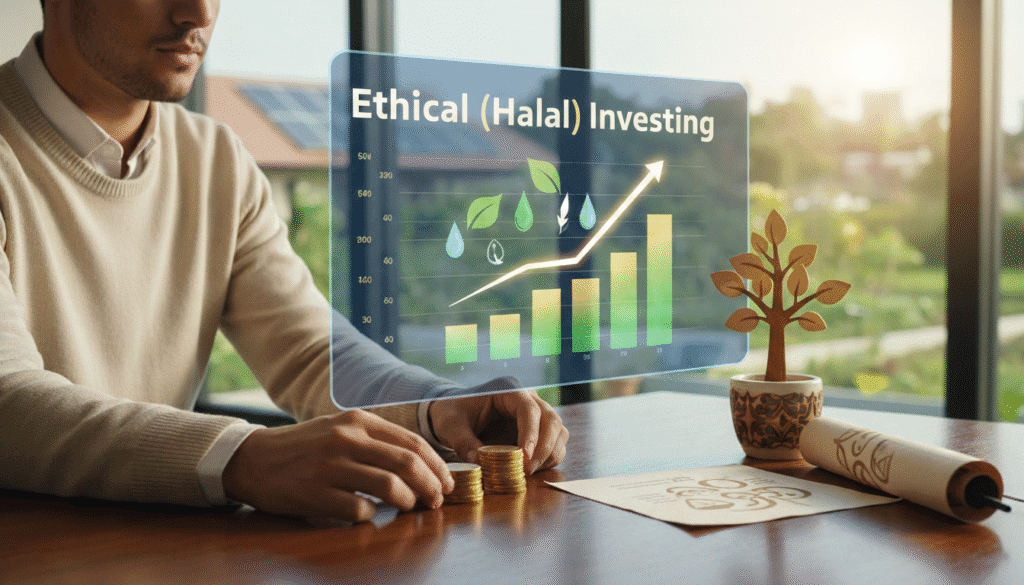
Furthermore, integrating Ethical (Halal) Investing has moved from a niche preference to a core risk-management tactic. By avoiding high-debt (highly leveraged) companies and industries with negative social impact, you naturally select for businesses with “Strong Balance Sheets.” This alignment of your values with your investment value creates a “Barakah” or blessing of stability. You aren’t just building a bank account; you are building an anti-fragile legacy that survives for the next generation.
Conclusion: Discipline is the Ultimate Investment
Starting your journey in investing for beginners in 2026 is an act of reclaiming your future. Success doesn’t belong to the smartest person, but to the most disciplined one. By mastering what is a stock, adhering to strict diversification rules, and letting Dollar-Cost Averaging run on autopilot, you remove the human error that destroys wealth.
The “Easy Money” era is over, but the era of the sovereign investor has just begun. Stop looking for shortcuts and start building your financial bridge. Set up your automated firewall, stick to your low-cost mutual funds, and let the twin engines of time and compounding do the heavy lifting. Start today, stay the course, and build the life you truly want to live.
Disclaimer: This content is for educational and informational purposes only and does not constitute financial, legal, or religious advice. Financial data and market conditions are subject to change, and we disclaim any responsibility before God for decisions made based on this analysis. It is your personal responsibility to ensure that your earnings and investments align with Sharia principles by consulting specialists or using verification tools where applicable. We are not responsible for any financial losses; seeking permissible sustenance remains your individual accountability.
To align your investment strategy with the technical frameworks of asset allocation and professional risk management for a resilient future in 2026, we recommend consulting these authoritative professional resources.
1.U.S. Securities and Exchange Commission (SEC): Real Estate Investment Trusts (REITs)
2.U.S. Securities and Exchange Commission (SEC): Investor Alerts and Bulletins
